
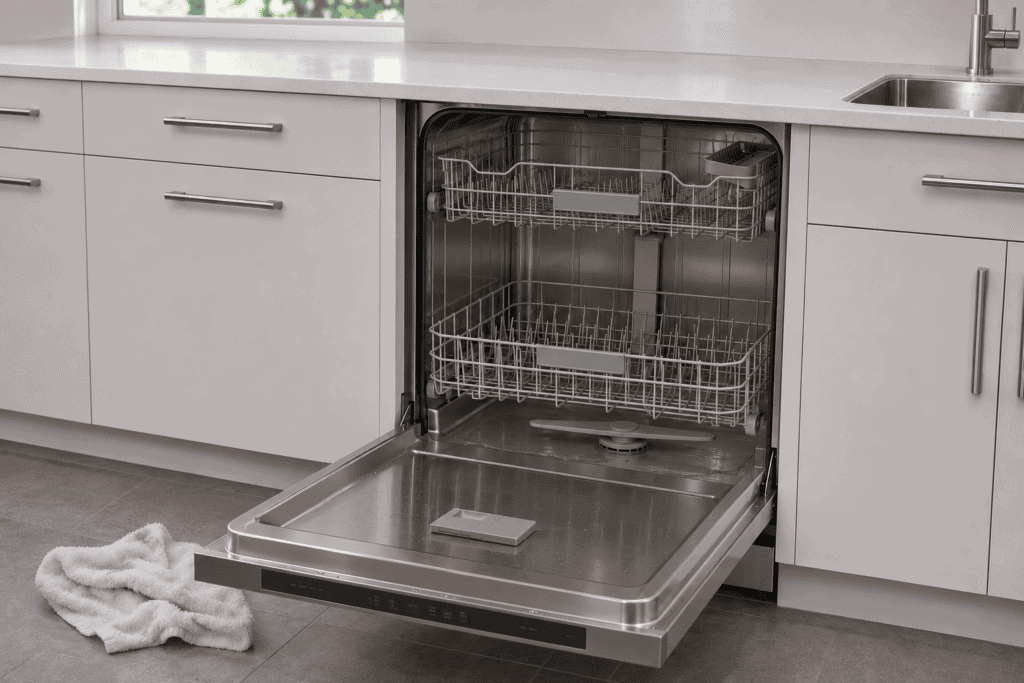
You finish a load, open the door, and find a pool of dirty water at the bottom. A dishwasher that will not drain is a common problem, and the cause is often small. Some causes are safe to check on your own. Others need a repair tech. This guide walks through both so you know what to try and when to stop.
Before you reach inside, turn the dishwasher off and cut the power. Unplug it if you can reach the plug, or switch off its breaker. The Electrical Safety Foundation International reminds homeowners that electricity and water don’t mix, and a dishwasher has plenty of both.
Start With the Simple Drain Checks
Most drain problems start with something simple. Work through these checks in order before you assume the worst:
- Look at the bottom of the tub. Take out the lower rack and check the filter and sump area for food scraps, bits of glass, labels, or toothpicks. Pull out what you can with your fingers or a paper towel.
- Clean the filter. Most dishwashers have a removable filter near the bottom, and your owner’s manual shows how it comes out. Rinse it under warm water and set it back snugly.
- Scoop out the standing water. A cup and a towel work fine. This lets you see the drain opening and keeps the mess down.
- Run a drain cycle. Close the door, press Cancel or Drain (the name varies by brand), and listen for the pump to start.
- Run the garbage disposal if you have one. The dishwasher often drains through it, so run it with cold water for a few seconds to clear the line.
One habit helps going forward. ENERGY STAR says to scrape food off your dishes instead of rinsing them first, since modern dishwashers and detergents are built to do the cleaning. Scraping also keeps big scraps from ending up in the filter.
If the water is gone after these checks, run a short cycle to make sure it drains all the way. If it still holds water, the cause is likely one of the problems below.
Common Reasons a Dishwasher Won’t Drain
When the simple checks don’t solve it, one of these is usually behind the problem.
A clogged filter and sump. Food, grease, and bits of broken glass collect at the bottom of the tub. When the filter packs with debris, water has nowhere to go. Cleaning it is the first fix, and sometimes the only one you need.
A kinked or blocked drain hose. The drain hose runs from the dishwasher to your sink drain or disposal. If it gets bent behind the unit or fills with buildup, water backs up into the tub. Checking it usually means pulling the dishwasher out, so we suggest leaving that to a technician unless you’re comfortable doing it safely.
A disposal knockout plug or air gap. When a new garbage disposal is installed, a small plug inside the dishwasher inlet has to be knocked out. If it was left in place, water can’t pass through. Some homes also have an air gap, a small fitting on top of the sink, and it can clog too. Both are quick to check.
A jammed drain pump or check valve. The drain pump pushes water out of the tub, and a check valve keeps dirty water from flowing back in. Debris can jam the pump, and either part can wear out over time.
A control or drain valve fault. Some models rely on a valve or control board to tell the pump when to run. If that part fails, the dishwasher may never start the drain step. This is not a do-it-yourself fix.
When the Dishwasher Hums, Drains Slowly, or Still Has Standing Water
What you hear and see can point to the cause, so pay attention to how the dishwasher behaves.
Humming but not draining
A hum with no water leaving often means the drain pump is trying to run but can’t. A piece of glass or a small bone can jam it, or the motor may be worn out. Turn the power off and keep your hands out of the pump area. If you’ve cleaned the filter and the hum continues, it’s time to call a tech. Running the cycle again and again won’t clear a jam.
Also pay attention to your breaker. The Electrical Safety Foundation International says an appliance that repeatedly trips a breaker should be unplugged and repaired, because it may have a defect that could cause a fire or electrical shock.
Draining slowly, or only after the disposal runs
A slow drain usually means a partial clog. If the dishwasher only drains after you run the disposal, the problem is probably in the shared drain line or at the disposal connection, not in the dishwasher itself. Check that the knockout plug was removed, and look for food packed into the disposal inlet.
Also test your sink. If the sink drains slowly too, the clog may be farther down the plumbing, and you may need a plumber instead of an appliance tech. If the sink drains fine and the dishwasher still won’t, the dishwasher is the likely culprit.
When to Call for Dishwasher Repair in Renton
It’s time to call a professional if you’ve cleaned the filter and sump and run a drain cycle but water is still standing in the tub. The same goes if the dishwasher hums or grinds, trips a breaker, leaks, or you simply can’t tell what’s wrong. Guessing with a full tub of dirty water and a live power connection is not worth the risk.
We repair dishwashers from all major brands, including KitchenAid, LG, Samsung, Maytag, Bosch, Whirlpool, GE, Kenmore, and Frigidaire. We serve Renton, Bellevue, Seattle, and many nearby cities, so check our service area page for details. You can learn more about our dishwasher repair service in Renton, or contact us and tell us the brand and what you’ve already tried. That helps us figure out what’s going on with your dishwasher.
